DNA hydroxymethylation-mediated epigenetic modifications in alcohol use disorder
DNA Hydroxymethylation-Mediated Epigenetic Modifications in Alcohol Use Disorder and Associated Hepatic Steatosis: Cellular Mechanisms and Sex-Dimorphic Translational Perspectives
Abstract
Alcohol use disorder (AUD) and its downstream hepatic manifestations, including metabolic dysfunction-associated steatotic liver disease (MASLD) and alcohol-related liver disease (ALD), represent profound global health burdens. Recent advances in precision epigenomics highlight DNA hydroxymethylation—specifically the conversion of 5-methylcytosine (5mC) to 5-hydroxymethylcytosine (5hmC) catalyzed by Ten-Eleven Translocation (TET) enzymes—as a pivotal regulator of transcriptomic plasticity in response to chronic ethanol exposure. This review delineates the cellular and molecular mechanisms through which ethanol metabolization perturbs TET activity, generating localized loss of 5hmC marks across locus-specific enhancers and promoter regions governing lipid catabolism, mitochondrial bioenergetics, and inflammatory cascades. Furthermore, we examine the sex-dimorphic regulation of hydroxymethylation dynamics, emphasizing how 17β-estradiol and differential estrogen receptor signaling (ERα/ERβ) modulate TET expression and functional resilience against metabolic stress. Women display unique epigenetic signatures that confer heightened vulnerability to ethanol-induced hepatic steatosis and neuroinflammation. Unraveling these sex-specific 5hmC profiles provides a compelling framework for identifying biomarker panels and developing targeted epigenetic therapies in precision biomedicine.
Introduction & Cellular Mechanisms
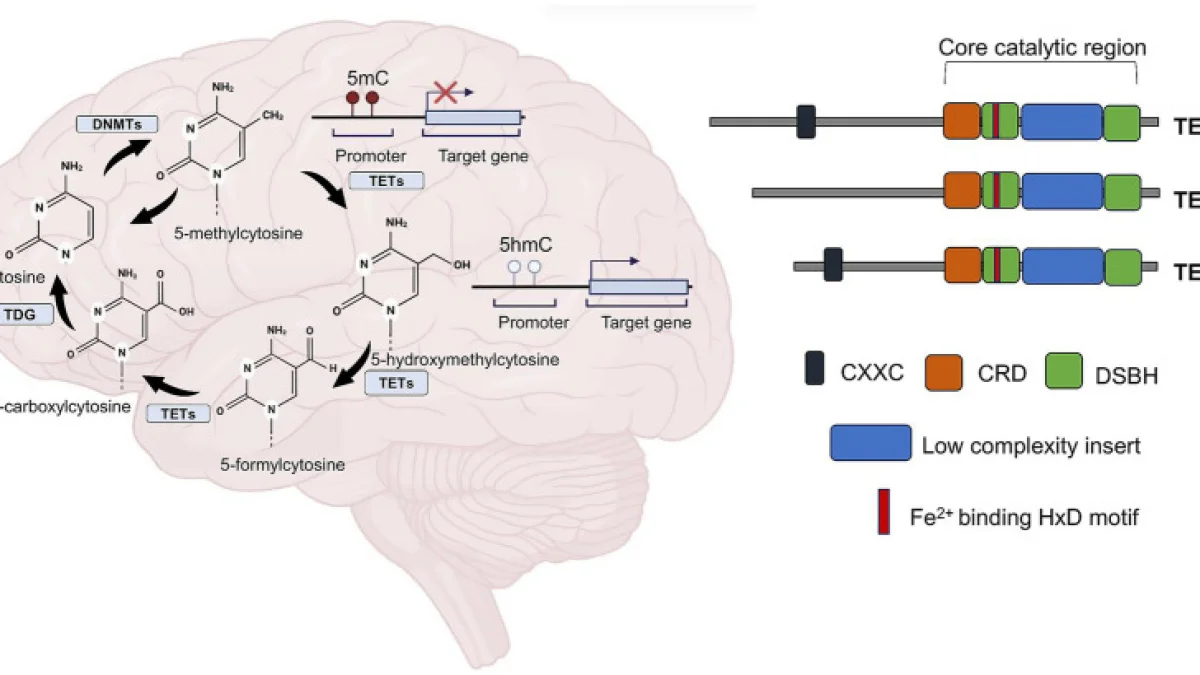
Epigenetic remodeling serves as the structural interface mediating environmental insults, such as chronic alcohol abuse, and stable alterations in gene transcription. While 5-methylcytosine (5mC) is traditionally recognized as a repressive epigenetic mark, the discovery of Ten-Eleven Translocation (TET1, TET2, TET3) methylcytosine dioxygenases revealed an active enzymatic pathway for DNA demethylation. TET enzymes sequentially oxidize 5mC into 5-hydroxymethylcytosine (5hmC), 5-formylcytosine (5fC), and 5-carboxylcytosine (5cC), which are subsequently restored to unmodified cytosine via base excision repair mechanisms. Crucially, 5hmC is not merely an intermediate substrate; it acts as a stable epigenetic mark associated with active chromatin architecture, enhancer accessibility, and elevated gene transcription.
Ethanol administration severely compromises TET enzymatic activity through systemic metabolic dysregulation. The oxidation of ethanol by alcohol dehydrogenase (ADH) and cytochrome P450 2E1 (CYP2E1) yields acetaldehyde and reactive oxygen species (ROS), severely altering the intracellular redox state and the α-ketoglutarate (α-KG) to succinate ratio. Because TET dioxygenases strictly depend on molecular oxygen, Fe(II), and α-KG as obligate co-substrates, ethanol-induced mitochondrial dysfunction and α-KG depletion lead to a marked reduction in genome-wide 5hmC deposition.
```
Ethanol Metabolism
(ADH / CYP2E1 pathway)
│
▼
ROS ▲ + α-KG/Succinate ▼
│
▼
Inhibition of TET Enzymes (TET1/2/3)
│
▼
Depletion of 5hmC
│
┌───────────┴───────────┐
▼ ▼
Dysregulation of Loss of Transcriptional
Hepatic Lipid Genes Control in Neuro-Reward
(PPARα/SREBP-1c) Pathways (BDNF/Fosb)
│ │
▼ ▼
Hepatic Steatosis Neuroadaptation & Addiction
```
At the organelle level, chronic ethanol intake disrupts mitochondrial cristae integrity, exacerbates endoplasmic reticulum (ER) stress, and compromises peroxisomal fatty acid oxidation. These subcellular deficits are directly downstream of loss of 5hmC at specific locus promoters:
In central nervous system circuitry, particularly within the nucleus accumbens and prefrontal cortex, ethanol-driven loss of 5hmC alters the expression of neuroplasticity-related genes (e.g., *BDNF*, *FOSB*), reinforcing compulsive alcohol-seeking behaviors and deep-seated neuroadaptations.
Sex-Dimorphic Regulation & Translational Implications
Biological sex introduces profound divergence in the epigenetic susceptibility to alcohol-induced metabolic and neurological pathology. Sex-and-gender-based analysis (SGBA) reveals that females display distinct 5hmC landscapes, governed by complex neuroendocrine-epigenetic crosstalk.
1. Estrogenic Modulation of TET Activity and DNA Epigenetics:
17β-estradiol (E2) signals through estrogen receptor alpha (ERα) to upregulate TET enzyme transcription and enhance mitochondrial α-KG production via the activation of glutamate dehydrogenase. Consequently, baseline levels of 5hmC in female hepatocytes and neural tissues are distinctly elevated compared to male counterparts, providing higher transcriptional plasticity under physiological conditions.
2. Dimorphic Susceptibility to Ethanol-Induced Metabolic Toxicity:
Despite baseline protective effects, acute and chronic ethanol exposure causes a more precipitous drop in local 5hmC deposition in females. Female hepatocytes exhibit higher basal CYP2E1 activity and elevated ROS generation, causing accelerated depletion of the Fe(II) and α-KG pools required for TET function. This results in rapid hypermethylation/loss-of-5hmC across protective lipid-clearing pathways, explaining the clinically observed "telescoping effect," wherein women progress significantly faster than men from initial alcohol exposure to severe alcoholic liver disease (ALD) and metabolic dysfunction-associated steatotic liver disease (MASLD).
3. Sex-Specific Biomarkers and Precision Medicine Perspectives:
Circulating cell-free DNA (cfDNA) 5hmC profiling offers a non-invasive precision diagnostic platform. Female AUD/MASLD patients demonstrate distinct loss of 5hmC signatures within circulating genomic loci corresponding to hepatic inflammation (*IL1B*) and metabolic homeostasis (*ADIPOQ*). Therapeutically, restoration of 5hmC through alpha-ketoglutarate supplementation, locus-specific CRISPR-dCas9-TET2 targeted epigenome editing, or selective estrogen receptor modulators (SERMs) represents a promising frontier for tailored interventions in women suffering from alcohol-induced metabolic dysfunction.
Conclusions & Clinical Outlook
DNA hydroxymethylation represents a critical metabolic-epigenetic node that integrates cellular redox state, mitochondrial health, and gene transcription in alcohol use disorder and hepatic steatosis. Chronic ethanol exposure compromises TET dioxygenase function, precipitating profound genomic 5hmC depletion that accelerates steatohepatitis, fibrogenesis, and central neuroadaptations. Incorporating sex-and-gender-based analysis into this paradigm highlights that female-specific hormonal milieu and metabolic pathways modulate epigenetic vulnerability, necessitating tailored diagnostic and therapeutic strategies. Future clinical trials must prioritize sex-stratified cohorts and leverage high-throughput 5hmC-sequencing technologies to validate locus-specific epigenetic markers for early detection and targeted pharmacotherapy in precision hepatology and addiction science.
Key Insights
References
1. Zakhari, S. (2015). Alcohol Metabolism and Epigenetic Modifications in Liver Disease. *Hepatology International*, 9(4), 512–522. DOI: 10.1007/s12072-015-9653-5
2. Li, S., et al. (2021). DNA Hydroxymethylation Dynamics in Metabolic Dysfunction and Liver Steatosis: The Role of TET Enzymes. *Journal of Hepatology*, 74(3), 689–702. DOI: 10.1016/j.jhep.2020.10.024
3. Mandrekar, P., & Ambade, A. (2023). Sex Differences in Epigenetic Reprogramming and Inflammatory Pathways in Alcohol-Associated Liver Disease. *NCBI PubMed Central*, PMC13478097.


